
Sweet Isn’t Necessarily Considerate: Understanding the Socially Reckless Dog
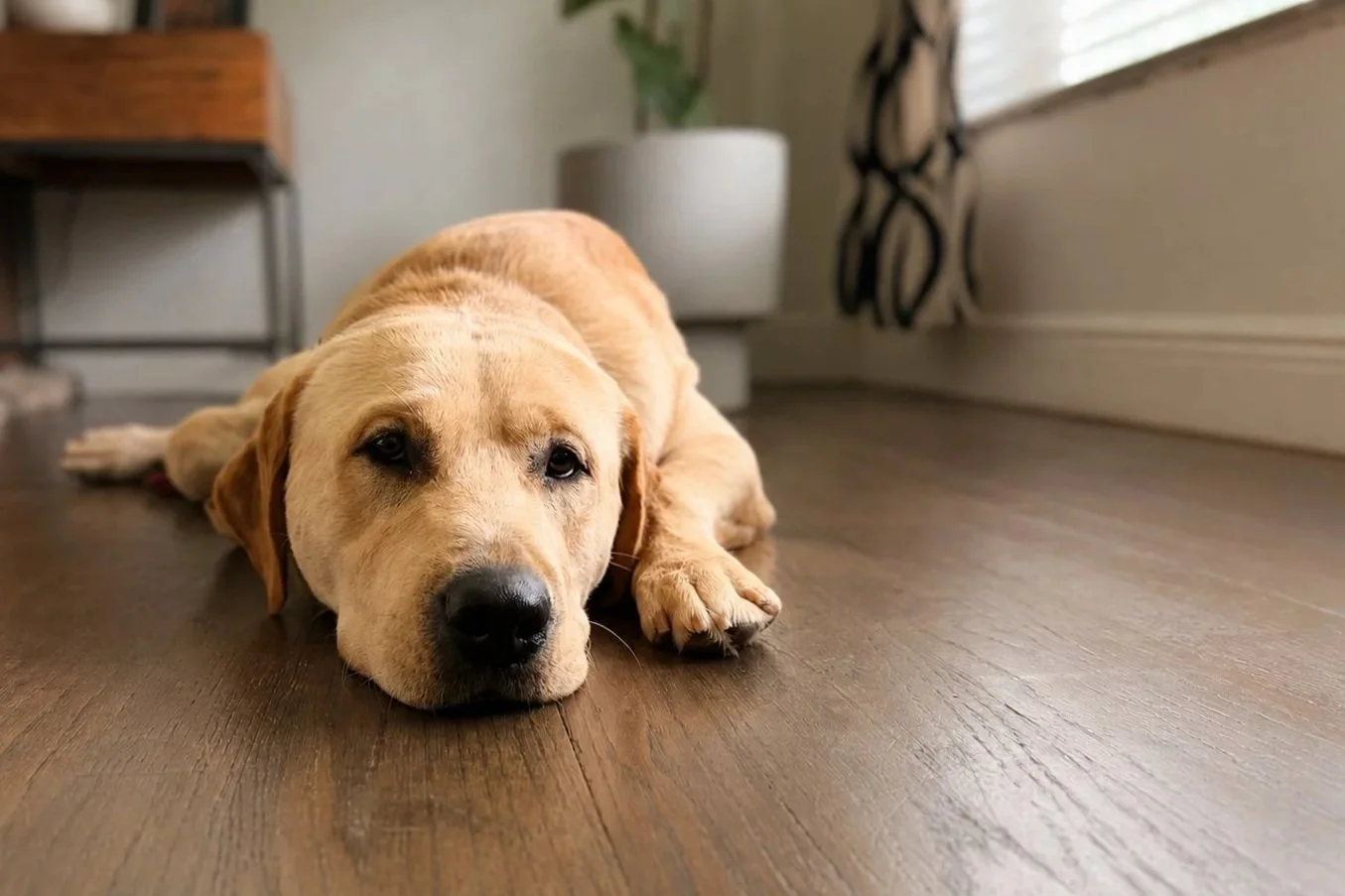
Some Dogs Are Sweet—and Socially Reckless
Some dogs move through the world as though nothing exists outside of what they want, feel, or anticipate in that moment.
They crash through doorways.
They bulldoze through people.
They invade another dog’s space.
They launch themselves into every transition.
They whine, pace, paw, push, climb, mouth, mount, and protest whenever stillness is expected.
They may be incredibly affectionate.
They may have no malicious intent whatsoever.
But they are also completely unaware of how their body, energy, and choices affect the world around them.
And that makes them socially reckless.
These dogs are often described as energetic, exuberant, goofy, playful, friendly, or “just a lot.”
But those descriptions rarely tell the whole story.
What we are actually looking at is a dog who has learned to use movement, noise, physical intrusion, and escalation to outrun discomfort.
Insecurity is the driving force.
The behavior on top can look bold, pushy, confident, or even comical.
That is why people so often misread it.
They Are Not Carefree. They Are Uncontained.
A dog who charges into every situation can look fearless.
A dog who climbs all over people can look affectionate.
A dog who barrels into another dog’s space can look social.
A dog who whines, screams, spins, and launches itself toward an experience can look excited.
But genuine confidence has awareness.
Confidence can pause.
Confidence can assess.
Confidence can enter a room without overtaking it.
Confidence does not require the dog to make contact with everything, control every interaction, or respond to every shift in the environment.
A socially reckless dog does not move with that kind of awareness.
It moves first and processes later.
There is little internal restraint between impulse and action.
The dog sees something and lunges toward it.
Feels something and vocalizes.
Wants something and pushes through whatever stands in the way.
Becomes uncomfortable and immediately escalates.
The dog is not asking:
“Is this appropriate?”
“Is this safe?”
“Does this other dog want me in its space?”
“Can I wait?”
“Can I handle not getting what I want right now?”
There is no pause long enough for consideration.
That absence of restraint is what makes the behavior reckless.
Sweet Does Not Mean Considerate
One of the hardest things for owners to reconcile is that a dog can be deeply loving and still be difficult to live with.
These dogs may adore people.
They may want constant physical contact.
They may greet everyone with enthusiasm.
They may be playful, funny, and emotionally expressive.
None of that means they are considerate.
Sweetness speaks to intention.
Consideration requires awareness and restraint.
A dog does not have to intend harm in order to cause it.
A socially reckless dog may knock someone down, slam into a child, injure an elderly person, overwhelm another dog, trigger a fight, crash through a doorway, pull someone off balance, or hurt itself in a state of extreme arousal.
The problem is not necessarily aggression.
The problem is that the dog has lost enough control that the outcome no longer matters to it in the moment.
There is no ability to consider the effect of its body, energy, or choices on anyone else.
That is why “at least he’s sweet” cannot be the end of the conversation.
Sweetness does not make recklessness safe.
Movement Becomes an Escape
For many of these dogs, constant movement is not simply a preference.
It is a coping mechanism.
Movement keeps the dog from having to sit with frustration.
Noise releases anticipation.
Physical contact distracts from uncertainty.
Pushing into space creates a temporary sense of control.
Escalation helps the dog avoid the discomfort of waiting, yielding, or not knowing what happens next.
The dog learns to stay in motion because stillness forces it to feel everything it has been trying to outrun.
That is why asking these dogs to STOP can produce such dramatic resistance.
They may whine.
Paw.
Pant.
Reposition.
Fixate.
Creep forward.
Pop out of a down.
Throw their body around.
Vocalize.
Mount.
Grab the leash.
Push into the handler.
Every expression says the same thing:
“I do not know how to be in this moment without doing something.”
The behavior looks excessive because the internal discomfort is excessive.
The Insecurity Is Often Hidden Beneath Bold Behavior
Insecurity does not always look timid.
It does not always look like cowering, hiding, trembling, or avoidance.
Sometimes insecurity looks LOUD.
Intrusive.
Demanding.
Fast.
Physical.
Overly social.
A dog may appear confident because it is constantly moving toward things rather than away from them.
But moving toward something compulsively is not the same as approaching it thoughtfully.
A secure dog can choose engagement.
An insecure dog may feel compelled to engage because neutrality feels intolerable.
The dog may have to investigate every person.
Rush every dog.
Respond to every sound.
Control every doorway.
Track every movement.
Participate in every event.
Its apparent boldness is often an inability to remain uninvolved.
That is not confidence.
It is hypervigilance wearing the costume of enthusiasm.
Physical Intrusion Is Not Always Affection
Owners often interpret constant touching, climbing, leaning, pawing, jumping, mouthing, or body-slamming as affection.
Sometimes it is affectionate.
But affection without boundaries can still become intrusive.
A dog who cannot share space without physically imposing itself is not simply loving.
It is using contact to regulate itself.
The dog may press into people because distance feels uncomfortable.
Climb into laps because being separate creates anxiety.
Jump because remaining on the floor requires restraint.
Mouth hands because the dog does not know what else to do with its energy.
Mount other dogs because arousal has exceeded its coping ability.
These behaviors are often reinforced because people find them funny, flattering, or endearing.
The dog learns that physical intrusion works.
It creates attention.
It controls proximity.
It releases tension.
It changes the environment.
Over time, the dog develops no concept of personal space because personal space has never been made meaningful.
Noise Is a Form of Emotional Leakage
Whining is often treated as background noise.
For these dogs, it is rarely insignificant.
They whine when food is coming.
When another dog moves.
When they hear someone wake up.
When they anticipate going outside.
When they are loaded into the car.
When they believe a walk may happen.
When they are confined.
When they are asked to wait.
When nothing is happening quickly enough.
The whining is not random.
It is emotional leakage.
The dog has not learned how to contain anticipation internally, so it spills outward through sound.
If every whine is answered, soothed, accommodated, or followed by access to the desired event, the dog learns that vocal agitation is part of the process.
The body may be contained, but the mind is still running the environment.
That is why silence matters.
Silence is not about creating a dog who is afraid to communicate.
It is about teaching the dog that discomfort does not have to become commentary.
Waiting does not require protest.
Anticipation does not require escalation.
A dog who can remain quiet while feeling something is beginning to develop emotional containment.
Transitions Expose the Truth
Many dogs appear successful once the event is already underway.
They may walk beautifully through a store.
Hold a down in a public setting.
Move calmly through a busy environment.
Pass another dog with control.
But what happened BEFORE that moment matters.
How many times did the dog explode while being geared up?
How much correction was required at the doorway?
How many resets happened before the dog could leave the crate appropriately?
What level of accountability was necessary before loading into the car?
Did the dog enter the environment calmly, or did it have to be stopped repeatedly before it became mentally available?
This distinction is critical.
Performance is not the same as regulation.
A dog may look polished after the structure has been firmly established, while still requiring significant intervention to reach that state.
For socially reckless dogs, transitions are often the hardest part of the entire process.
Coming out of the crate.
Going outside to potty.
Putting on equipment.
Moving toward the front door.
Getting into the car.
Entering a new building.
Waiting for food.
Hearing another dog come out.
Each transition carries anticipation.
Anticipation creates arousal.
Arousal creates impulsive behavior.
If the dog is allowed to move forward in that state, the transition itself becomes another rehearsal of emotional chaos.
The dog learns:
“This is how we leave the house.”
“This is how we approach food.”
“This is how we go for a walk.”
“This is how we enter the car.”
“This is how we respond when another dog appears.”
That is why slowing the dog between environments matters so much.
The next event should not begin until the dog is mentally available for it.
More Exercise Is Not Always the Answer
When people live with an uncontained dog, the most common recommendation is to tire it out.
More walks.
More daycare.
More play.
More running.
More enrichment.
More social exposure.
More freedom.
The assumption is that enough physical output will eventually produce CALM.
Sometimes it produces exhaustion.
That is not the same thing.
A dog can be physically tired and still emotionally dysregulated.
It can collapse for an hour and wake up ready to repeat the same reckless patterns.
When intense arousal is practiced through constant stimulation, the dog becomes better at accessing arousal.
The nervous system adapts to that state.
Chaos becomes familiar.
Stillness becomes foreign.
The dog begins to require greater levels of activity just to feel satisfied, and the owner becomes trapped in a cycle of trying to exhaust a dog that has never learned how to regulate.
Exercise is valuable.
Play is valuable.
Exposure is valuable.
But none of those things can replace the ability to STOP.
A dog who lives in motion does not always need another outlet.
Sometimes it needs containment.
Stillness Is the Missing Skill
For these dogs, stillness is not passive.
It is work.
It may be the hardest work they ever do.
Stillness requires the dog to remain present without acting on every impulse.
To feel anticipation without vocalizing.
To notice movement without joining it.
To experience frustration without escalating.
To remain separate without becoming anxious.
To wait without negotiating.
This is why lying down is not always enough.
A dog can be physically down while remaining mentally frantic.
Its head stays elevated.
Its eyes scan constantly.
Its body remains tense.
Its breathing is shallow.
It tracks every person, sound, door, and dog.
It is not resting.
It is waiting to explode.
True stillness looks different.
The head lowers.
The breathing changes.
The eyes soften.
The scanning stops.
The dog disengages from the environment.
The nervous system begins to surrender.
That is the state these dogs need to practice repeatedly.
Not for a few minutes.
Not only when they are exhausted.
Not only when nothing interesting is happening.
They need to practice stillness while life continues around them.
That is how regulation becomes a skill rather than an accident.
Accountability Must Come Before the Explosion
Once a dog has fully lost itself, communication becomes much more difficult.
The owner is no longer guiding a thoughtful dog.
They are trying to interrupt a nervous system that has already reached maximum speed.
That is why timing matters.
Accountability must begin before the dog becomes unreachable.
At the first sign of inappropriate arousal.
The first whine.
The first surge forward.
The first attempt to push through the doorway.
The first fixation.
The first expression of “I am no longer listening because I have decided what happens next.”
The goal is not to wait until the dog is hysterical and then respond with frustration.
The goal is to prevent hysteria from becoming the rehearsal.
For a dog of this nature, the rule must become clear:
You do not get to enter the next experience in a reckless state.
The leash does not go on while you are thrashing.
The door does not open while you are surging forward.
The food does not arrive while you are whining.
The car does not move while you are screaming.
The walk does not begin while you are emotionally unavailable.
The event WAITS. YOU wait.
The dog resets.
Stillness is restored.
Then movement is earned.
The Correction Is Not the Entire Lesson
Accountability is necessary, but correction alone does not create regulation.
The correction interrupts the state.
The repetition teaches the pattern.
The pause gives the dog an opportunity to choose differently.
The follow-through makes the expectation believable.
The reward is access to the next experience from a calmer state.
The complete lesson is not simply:
“Do not do that.”
It is:
“When you become reckless, movement stops.”
“When you regulate, life continues.”
Over time, the dog begins to understand that calmness is not the absence of opportunity.
Calmness is what creates opportunity.
Owners Must Stop Rewarding Intensity
Many socially reckless dogs are surrounded by people who unintentionally admire the very state that is destabilizing them.
They laugh when the dog crashes into the room.
Celebrate frantic greetings.
Talk excitedly during transitions.
Allow the dog to climb, mouth, paw, and demand.
Call hysteria happiness.
Call intrusion affection.
Call agitation personality.
The dog receives constant confirmation that intensity is valuable.
Then the same people become frustrated when the dog cannot turn it off.
We cannot repeatedly celebrate or give attention to a state and then expect the dog to abandon it on command.
Owners have to become more discerning.
Not every display of excitement is joy.
Not every demand for contact is affection.
Not every desire to engage is confidence.
Sometimes the dog is simply unable to contain itself.
That state does not need more applause.
It needs leadership.
Stop Asking the Dog to Self-Regulate Without Teaching It How
Owners often say:
“He needs to calm down.”
“She needs to make better choices.”
“He knows better.”
But socially reckless dogs may not possess the internal skill required to do those things consistently.
They cannot simply be given freedom and expected to discover regulation on their own.
They need external structure long enough for internal restraint to develop.
That means the human becomes the brakes until the dog begins to build brakes of its own.
The human slows transitions.
Controls access.
Interrupts escalation.
Requires waiting.
Insists on spatial boundaries.
Follows through on silence.
Creates predictable routines.
Prevents repeated rehearsal of chaos.
This is not about controlling the dog forever.
It is about supplying the containment the dog does not yet possess.
Environment Matters More Than People Realize
A dog cannot repeatedly spend its days in environments that reward unhinged behavior and then be expected to return home emotionally regulated.
Free-for-all daycare.
Uncontrolled dog parks.
Constant rough play in the backyard.
Repeated fence running.
Chaotic greetings.
Unstructured social interactions.
Unlimited access to the home.
All-day stimulation.
These environments can become training grounds for dysregulation.
Every rehearsal strengthens the state.
Every uncontrolled interaction teaches the dog to respond faster, harder, and with less thought.
A dog may make meaningful progress during training and still experience dramatic fallout if it returns to the same lifestyle that created the problem.
The home environment must support the new state.
Otherwise, training becomes something the dog performs temporarily rather than a way of living.
Living With Another Dysregulated Dog Magnifies the Problem
When two intense dogs live together, they can become emotional accelerants for one another.
One dog hears movement and begins whining.
The other joins.
One rushes the door.
The other escalates.
One reacts to a dog outside.
The other amplifies the response.
Their nervous systems begin communicating faster than the humans can intervene.
This does not mean the dogs must never coexist.
It means they cannot be allowed to practice shared chaos as a lifestyle.
They need individual work.
Separate crate time.
Separate walks.
Separate transitions.
Separate opportunities to develop independence.
They must learn to regulate without using one another as emotional fuel.
Only then can they begin practicing calmness together.
Progress Is Not Always Pretty
These dogs can make beautiful progress.
But progress may not look effortless.
A dog may require multiple resets before leaving the house.
Several corrections before settling into a walk.
Repeated accountability before remaining silent.
Long periods of stillness before the body finally softens.
That does not mean the training is failing.
It means the dog is being asked to do something profoundly unfamiliar.
The mistake is assuming that because the dog can perform well once regulated, the underlying issue has disappeared.
It may still take considerable effort to produce that state.
The goal is to reduce how much intervention is required over time.
At first, the human may have to create the calm.
Eventually, the dog begins to access it more quickly.
With enough repetition, the dog starts arriving there on its own.
That is when regulation becomes real.
These Dogs Do Not Need Less Personality
Teaching stillness does not erase joy.
Boundaries do not remove sweetness.
Accountability does not make a dog robotic.
Structure does not shrink personality.
It makes personality safer to live with.
The goal is not to take away enthusiasm.
It is to teach the dog that enthusiasm does not require chaos.
The goal is not to suppress affection.
It is to teach the dog that affection can exist without intrusion.
The goal is not to eliminate movement.
It is to teach the dog that movement begins from a thoughtful state.
The goal is not to make the dog smaller.
It is to help the dog become more capable.
The Dog Must Learn to Live Inside Its Own Skin
At the root of socially reckless behavior is often a dog who does not know how to remain peacefully inside itself.
It needs contact.
Movement.
Noise.
Stimulation.
Access.
Interaction.
Something external must always be happening because internal stillness feels intolerable.
That is why the work is so much deeper than obedience.
Sit, down, place, heel, and recall are valuable.
But the command is only the container.
The real lesson is what the dog learns while remaining inside it.
Can the dog wait without whining?
Can it lie down without scanning?
Can it watch another dog move without joining?
Can it hear the leash without exploding?
Can it feel excitement without becoming reckless?
Can it remain still long enough for its mind to soften?
That is the transformation.
Because a Dog Who Cannot Stop Itself Will Always Need Someone Else to Stop It
These dogs are not bad.
They are not malicious.
They are not beyond help.
Many of them are extraordinarily sweet.
But sweetness does not create restraint.
Love does not automatically produce regulation.
And more freedom does not teach a dog how to handle freedom.
A socially reckless dog needs clear boundaries, carefully managed transitions, meaningful accountability, predictable structure, and repeated practice with the one thing it will resist most:
Stillness.
Because until the dog learns how to stop, every feeling becomes movement.
Every desire becomes action.
Every transition becomes escalation.
And every environment becomes something it must overtake.
The goal is not to extinguish the dog’s joy.
The goal is to make joy safe.
To teach the dog that excitement does not require chaos.
Anticipation does not require hysteria.
Affection does not excuse intrusion.
And confidence does not need to bulldoze through the world.
A dog who learns to pause can finally begin to think.
A dog who learns to be still can finally begin to feel safe.
And a dog who learns to contain itself no longer has to be contained by everyone around it.