
The subtle difference between providing guidance and becoming an obstacle to independence.
There’s a particular kind of satisfaction that comes from being needed.
We like knowing we can solve a problem. Offer an answer. Make something easier. Provide reassurance. Point someone in the right direction.
Being helpful makes us feel valuable.
And for many of us, that desire comes from a genuinely loving place.
But there’s a question we don’t often ask ourselves:
Are we helping because our involvement is necessary, or because being needed has become part of how we measure our worth?
It’s an uncomfortable distinction.
Because sometimes what we call support is actually our reluctance to step aside.
And sometimes the very thing we’re trying to improve is being held back by our constant participation.
The Invisible Ego of Being Helpful
We tend to associate ego with arrogance, superiority, or the need to be right.
But ego can also disguise itself as helpfulness.
It can appear as the person who always has an answer. The one who anticipates every need. The one who struggles to watch someone else approach a situation differently.
Not necessarily because their intentions are selfish.
But because being useful has become deeply connected to their sense of identity.
When we’re accustomed to being the person who fixes things, stepping back can feel like neglect.
Silence can feel like indifference.
Allowing someone else to make a decision can feel like surrendering responsibility.
So we keep participating.
We explain more than necessary. Offer guidance that wasn’t requested. Intervene before there’s a problem to solve.
And without realizing it, we begin confusing our presence with our contribution.
But those aren’t always the same thing.
Just because we CAN contribute doesn’t mean our contribution is needed.
The Difference Between Guidance and Interference
Genuine guidance serves a purpose.
It provides information, establishes understanding, creates clarity, or helps someone navigate something they aren’t yet equipped to handle independently.
Interference begins when our involvement continues beyond that purpose.
When we provide answers before allowing someone to think.
When we interrupt decisions that don’t require correction.
When we make ourselves responsible for managing every detail of an outcome.
The distinction isn’t simply whether we’re doing something helpful.
It’s whether our involvement is helping someone develop the ability to function without that involvement.
Because there is a difference between supporting someone’s growth and making ourselves a permanent requirement for their success.
And nowhere is this more apparent than in our relationships with dogs.
When Our Dogs Become Dependent on Our Direction
Think about how often we communicate with our dogs throughout the day.
We tell them where to go, when to move, when to stop, what to look at, what not to look at, when to settle, and when to return their attention to us.
Some of that communication is necessary.
Especially when we’re teaching something new, establishing expectations, or navigating situations where our dogs haven’t yet developed reliable judgment.
But what happens when the teaching has already taken place?
What happens when a dog understands the expectation, yet we continue managing every moment as though they don’t?
Consider the dog who has been taught to remain on Place.
They understand the command. They’ve practiced remaining there. They know what is expected.
Yet the owner continues hovering nearby.
“Stay.”
“Good.”
“Don’t move.”
“Stay.”
Every adjustment receives commentary. Every glance prompts reassurance. Every moment of stillness becomes another opportunity for interaction.
The owner believes they’re reinforcing the behavior.
But they may also be teaching the dog that remaining settled is an activity requiring constant participation from the human.
Instead of allowing stillness to become ordinary, we keep making it an event.
And sometimes, the attention itself becomes the very thing that prevents the dog from disengaging.
The Opportunity Hidden in Doing Nothing
One of the most valuable things we can observe in training is what a dog chooses to do when we aren’t actively directing them.
Not because we’ve abandoned our expectations.
But because we’ve established them clearly enough that constant reminders are no longer necessary.
Does the dog remain on Place when we’re occupied with something else?
Can they maintain Heel without hearing the command repeated every few steps?
Can they notice a distraction without requiring us to narrate every stage of the encounter?
Can they make an appropriate decision when given the opportunity?
These moments tell us something important about the depth of their understanding.
A dog who performs a behavior only while we’re actively managing it may have learned to respond to our direction.
But a dog who maintains an understood expectation without constant prompting is demonstrating something more.
The guidance has begun to become internalized.
That is an important part of developing reliability.
Of course, this doesn’t mean we should wait passively while a dog rehearses unwanted behavior.
Timing matters. Awareness matters. Accountability matters.
A dog who is beginning to fixate on another dog, for example, may need timely intervention before that fixation develops into a reaction.
The goal isn’t to become uninvolved.
It’s to become more discerning about when our involvement actually serves a purpose.
Leadership Doesn’t Require Constant Participation
There’s a common misunderstanding that leadership means always being in charge of every moment.
Always directing.
Always correcting.
Always reminding.
But effective leadership isn’t measured by the volume of our involvement.
It’s measured, in part, by the understanding and reliability that involvement creates.
A teacher doesn’t demonstrate mastery by answering every question for the student.
A parent doesn’t develop responsibility by making every decision for the child.
And a dog owner doesn’t necessarily create a more reliable dog by providing an endless stream of instructions.
At some point, the purpose of teaching is to discover what has actually been learned.
And we cannot fully discover that while continually supplying the answer.
This requires a particular kind of confidence.
The confidence to establish an expectation and allow it to exist without constantly reinforcing our presence.
The awareness to recognize when intervention is necessary.
And the restraint to recognize when it isn’t.
Sometimes the most meaningful evidence of our leadership is what continues to happen when we’re no longer actively directing it.
When Helping Becomes a Habit
Perhaps the most revealing part of this conversation has very little to do with dogs.
It’s about us.
Why do we feel compelled to fill every silence?
Why does watching someone navigate a situation independently sometimes make us uncomfortable?
Why do we find it difficult to trust an expectation we’ve already established?
Sometimes the answer is that we’re still learning to trust the process ourselves.
Other times, it’s because we’ve become so accustomed to being needed that we haven’t considered what successful guidance might actually look like.
We may say we want independence while unconsciously maintaining the conditions that make our involvement necessary.
And that contradiction is worth examining.
Because the goal of helping shouldn’t always be to remain indispensable.
Sometimes the greatest contribution we can make is creating the conditions in which our constant contribution is no longer required.
The Quiet Confidence of Stepping Aside
There will always be moments when our dogs need guidance.
Times when an expectation needs clarification. When a distraction exceeds their current abilities. When a decision requires intervention or an established boundary requires accountability.
Responsible leadership means recognizing those moments and responding appropriately.
But it also means recognizing the moments that don’t need us.
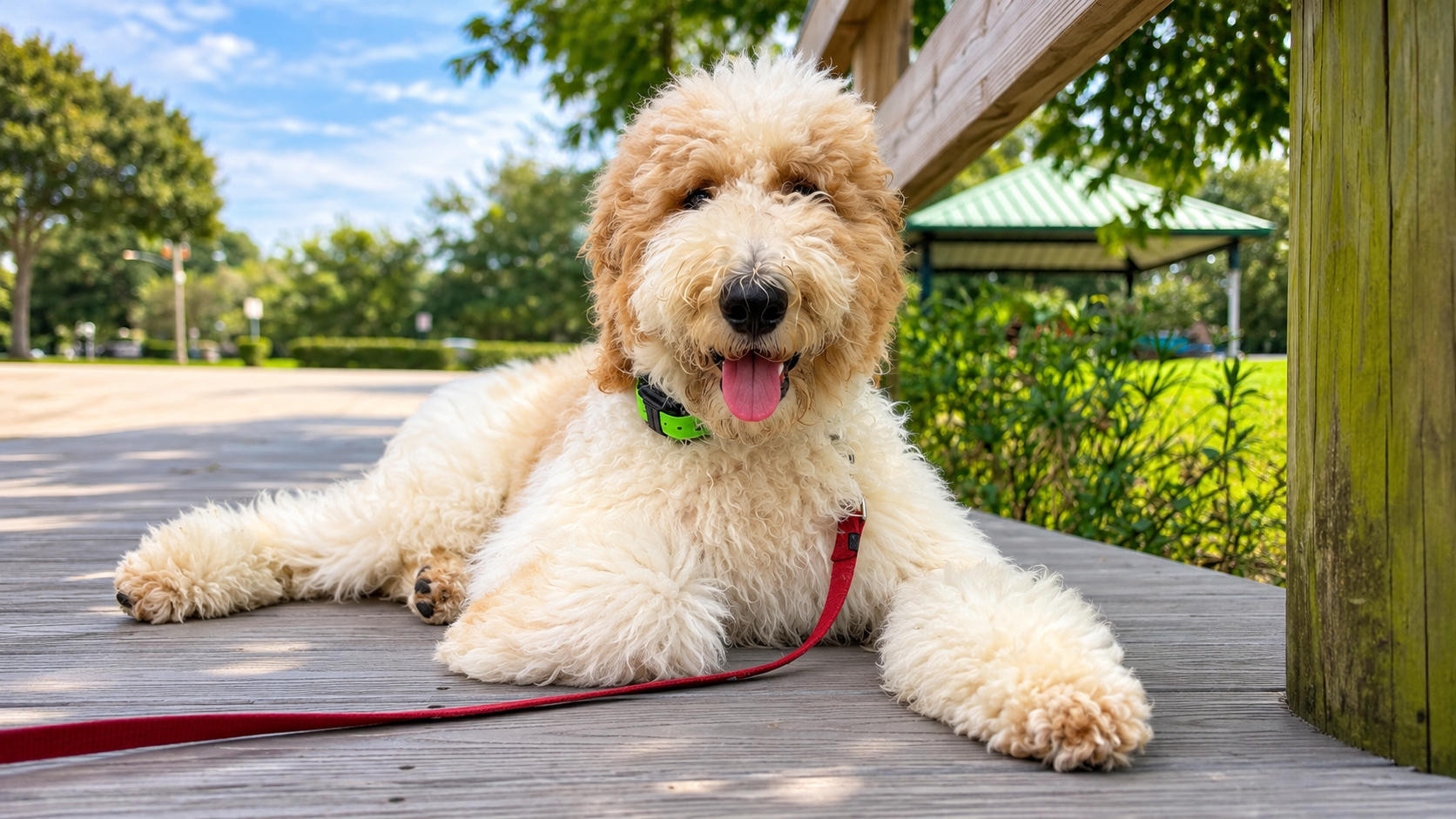
The dog who is resting peacefully without our reassurance.
The dog who maintains an expectation without another reminder.
The dog who notices something interesting and chooses not to participate.
Those moments deserve our attention, too.
Not necessarily our involvement.
Because independence isn’t created by removing leadership.
It’s created when leadership has provided enough clarity, consistency, and experience that the dog can begin demonstrating what they’ve learned without constant direction.
And perhaps that is one of the most meaningful lessons our dogs can teach us about ourselves.
Our value isn’t measured by how indispensable we remain.
Sometimes the greatest expression of leadership is having the wisdom to recognize that our guidance has done its job.
And the confidence to let that be enough.
Live 🩵 PAWSitively CALM