
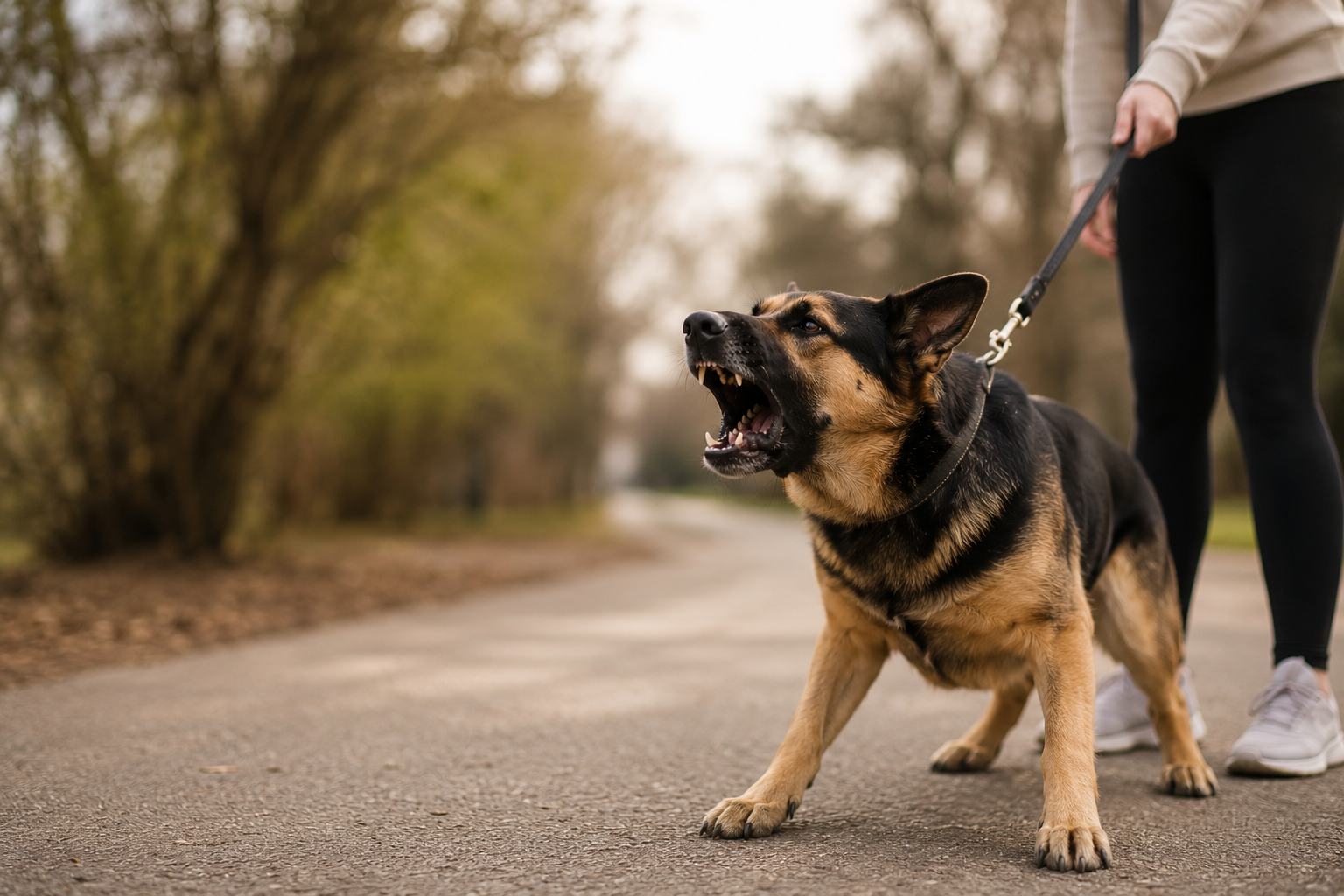
If your dog barks, lunges, growls, freezes, screams, or completely loses their mind around other dogs, strangers, visitors, bicycles, cars, or unfamiliar situations—you are not alone.
Reactive behavior is one of the most common reasons owners reach out to us. And while it can feel embarrassing, stressful, and overwhelming, reactivity is not random. It’s information.
Your dog’s behavior is telling you that they don’t currently know how to process pressure, stimulation, uncertainty, or excitement in a healthy way. In other words, what you’re seeing is often less about disobedience and more about emotional regulation.
Reactivity Is A Symptom, Not The Root Problem
Many owners become fixated on the outward behavior itself—the barking, lunging, whining, growling, or inability to settle.
But behavior is often just the smoke, not the fire.
Underneath reactive behavior we commonly find:
• Anxiety
• Insecurity
• Fear
• Over-arousal
• Excessive freedom
• Lack of accountability
• Chronic overstimulation
• Difficulty recovering from stress
While every dog is different, the unhealthy response itself is rarely the true issue. The real problem is that the dog lacks the ability to regulate themselves when life becomes difficult, exciting, or unpredictable.
More Exercise Isn’t Always The Answer
One of the biggest misconceptions in dog training is that a reactive dog simply needs more exercise.
While physical activity is important, tired dogs can still be anxious dogs.
In fact, many reactive dogs are already living highly stimulating lifestyles filled with endless walks, dog parks, daycare, constant entertainment, and unrestricted freedom.
More stimulation does not always create calm.
Sometimes it creates even more stimulation.
Calm is not something a dog “burns off.”
It’s something they learn.
Leadership Creates Clarity
Dogs thrive when life becomes predictable.
Structure, boundaries, routine, and accountability help remove the burden many dogs feel when they believe they are responsible for navigating the world themselves.
When a dog learns they don’t have to handle every situation, monitor every sound, react to every trigger, or make every decision, they begin to relax.
They learn to defer.
And from that deference comes trust.
Not because they have been dominated.
Not because they have been forced.
But because they finally understand that someone else is calmly and confidently leading the way.
Freedom Is Earned Through Responsibility
We all want freedom for our dogs.
More inclusion.
More adventures.
More off-leash opportunities.
But freedom is not the starting point.
Freedom is the reward for emotional stability.
Too much liberty offered too soon often magnifies anxiety, impulsiveness, and reactivity.
Healthy dogs are not created through endless indulgence.
They are created through clarity, accountability, and follow-through.
Structure does not limit freedom.
Structure creates it.
Reactivity Doesn’t Have To Become Your Dog’s Identity
Far too many people accept reactive behavior as permanent.
“My dog just hates other dogs.”
“He’s anxious.”
“She’s a rescue.”
“That’s just who he is.”
But dogs are capable of change.
While genetics and past experiences certainly matter, they do not have to dictate the future.
Dogs can learn.
Confidence can grow.
Trust can deepen.
And emotional responses can change.
The goal is not perfection.
The goal is progress.
When Should You Seek Professional Help?
If your dog:
• Lunges at people or dogs.
• Cannot recover after becoming triggered.
• Is becoming increasingly anxious.
• Is difficult to live with.
• Makes everyday life stressful.
• Is beginning to show aggressive behavior.
It may be time to seek guidance.
The longer unhealthy responses are rehearsed, the more deeply they become ingrained. Addressing the issue early often leads to better outcomes and greater freedom in the future.
For dogs struggling with anxiety, fear, aggression, or severe reactivity, our Behavior Modification Program focuses on emotional regulation, accountability, and rebuilding trust through structure and calm leadership.
→ Learn More About Our Behavior Modification Program
Our Approach
At PAWSitively Calm, we believe obedience is only part of the picture.
Through our immersive in-home board and train programs, we help dogs develop emotional regulation, accountability, confidence, and trust.
Because behavior changes when outcomes matter.
Clarity creates calm.
And when leadership shifts, everything changes.
If you’d like to see what that transformation looks like in real life, explore some of the dogs we’ve helped through our immersive training programs.
→ View Real Dog Transformations
Final Thought
Every dog deserves clarity.
Every owner deserves hope.
And while every journey is different, behavior change becomes possible when leadership shifts and trust begins to grow.
For dogs whose reactivity is deeply ingrained or affecting everyday life, our immersive Behavior Modification Program provides the consistency, structure, and individualized guidance needed to address what is driving the behavior—not simply manage the symptoms.
Want to learn more about the philosophy behind our approach?