Selfish or Virtuous?
I remember feeling this way…
Mean, too controlling, inhumane even, for forcing my dogs do anything they didn’t want to.
Why on Earth would I ever make any dog uncomfortable!
So instead of allowing the yucky feelings associated with enforcing rules, I exalted myself to sainthood by “turning a blind eye” to poor behavior because I was a kinder, more loving, and absolutely more ethical owner for doing so.
All three dogs had much smaller, narrow lives. All three needlessly struggled with fear, anxiety, stress, and emotional regulation. All three recklessly put themselves, or others, in danger. All three were TERRIBLY misbehaved.
Shouldn’t my kindness have produced the opposite effect?
How could being prisoners of their own home, fence fighting with neighbors dogs, panicked reactivity at every unpredictable sound, severe attachment and dependency issues, as well as human and dog aggression, all be the result of sharing love and kindness?
The truth was that withholding rules, boundaries, and structure wasn’t for my dog’s sakes at all. It was for me. I selfishly ignored their bad behavior because enforcing rules or implementing more structure felt mean and hard. So instead of doing what was best for them, I did what felt easy to me.
Pure selfishness.
My “honorable” rationalization was seemingly contradictory.
Sometimes we have to get REAL low before we actually see the error of our ways…
I could no longer justify withholding clarity for right or wrong, feedback for good or bad, or discipline for REALLY awful behavior. I learned that the most loving thing I could do for my trio was to actually parent and lead more.
This was certainly the more virtuous path.
And it has led me here — helping others see the truth that we are all unwittingly blind to.
Conditioning For Stress
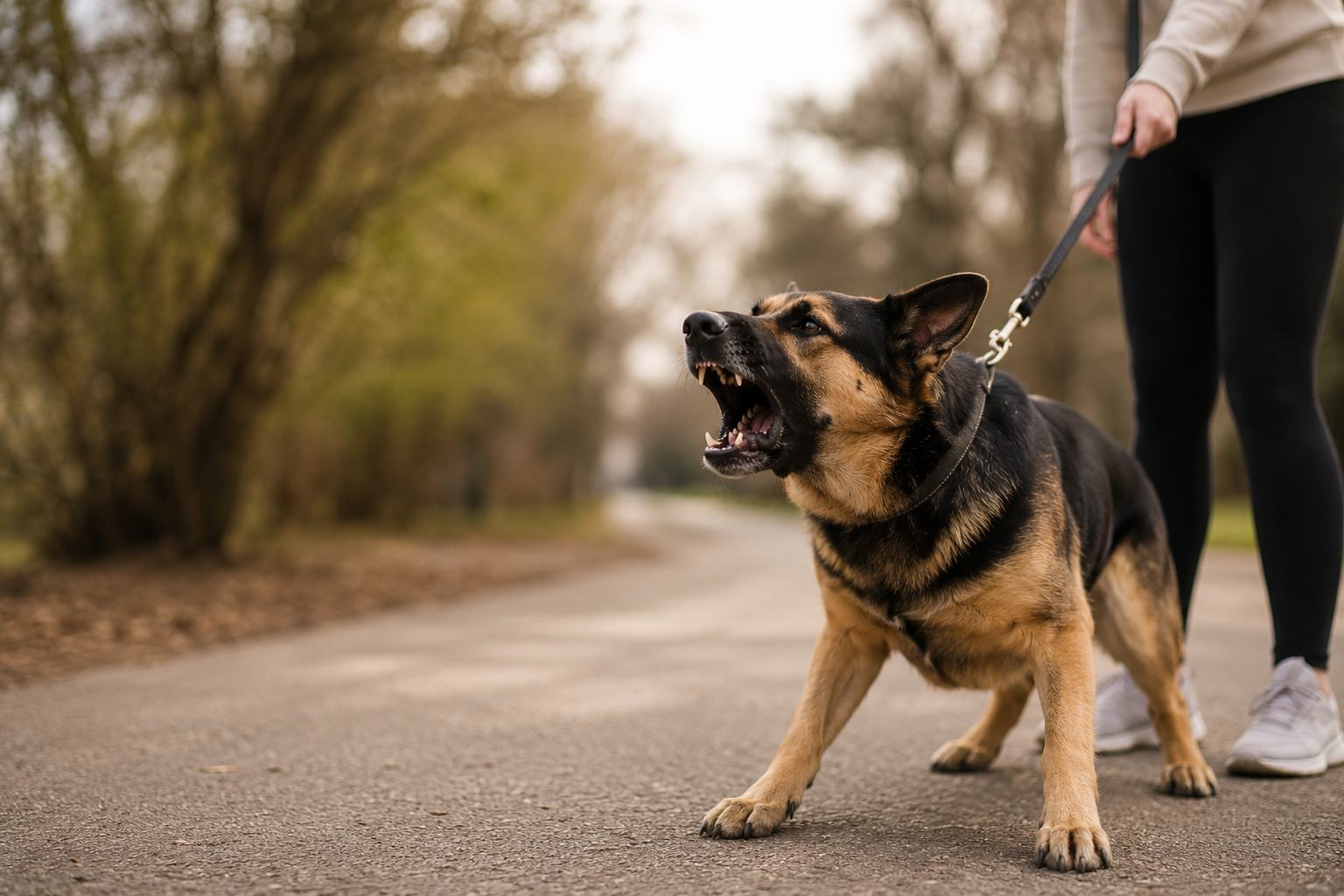
For any dog that has successfully avoided pushing through a stressful situation, and reacts with aggression, barking, growling, or flight, the reward is to either scare the threat away by growling, or to run from it.
Unfamiliarity creates a feeling of unease in both dogs and humans alike. Contemplating the horrors to be discovered in the depths of the unknown can reek havoc on our abilities to make healthy, balanced choices. Until we are exposed to something repeatedly, and conditioned to embrace it, we will react to avert the discomfort that could potentially be looming. Random noises, movements, or stranger danger can be startling.
For any dog that has successfully avoided pushing through a stressful situation, and reacts with aggression, barking, growling, or flight, the reward is to either scare the threat away by growling, or to run from it. This reinforces the fear.
Porter, my tri-colored CKCS, was one of those dogs that was afraid of his own shadow. Quick movements, unfamiliar sounds, or even the wind would stir this guy into a frenzy. Although this sweet-natured boy wouldn't hurt a flee, his explosive reaction to any encroaching unfamiliarity was a spectacle to be seen. A strange encounter, human or dog, was vocalized in bloody murder. A loving, outreached hand was interpreted as a direct threat.
Stranger: "Oh, he's so beautiful, can I pet him?"
Growling ensues. "Oh, wow, does he bite?"
Me: "Uhh, no, at least he hasn't yet, but he is letting you know that he doesn't want you to pet him."
Of course, my natural instinct was to scoop him into my arms and soothe him with baby talk and oodles of unwarranted affection. Boy did this reinforce his reactivity. Our walks were now being met with uncontrollable barking at anything unfamiliar. A rock could provoke this guy into panic! Our walks became a total and complete embarrassment to be avoided at all costs. Forget any visits to the local veterinarian. His fear would overcome him to the point of pancaking before entering the building. His reward: my unwavering reassurance through affection, and total avoidance of anything unfamiliar. The exact opposite of what I should have been doing.
A typical dog owner’s natural impulse is to coddle and soothe a fearful dog in times of stress, when in fact, what the dog really needs is the exact opposite. How did I turn the tables? Tough love (this was hard for me). Unwavering leadership in the face of a threat. Training for state of mind. Creating calm on command. Helping Porter process an unfamiliar event with confidence because he knows that I will always advocate for his best interest. Repeatedly introducing the triggers that provoke the undesired behavior, and helping him work through them. Zero affection for at least 60 days. Praise only for being calm. Accountability, accountability, accountability. Reassurance through leadership. All of this will eventually make the unfamiliar more tolerable and manageable.