
Not Every Dog Is Meant for the Farmer’s Market
The Expectation That Keeps Owners Stuck
There’s a version of the “ideal dog” that gets quietly sold to almost every owner.
The one who can go anywhere.
Handle anything.
Sit calmly under a table at a brewery.
Walk through a crowded farmer’s market like it’s nothing.
Greet strangers politely.
Ignore other dogs completely.
Unbothered. Social. Easy.
And when your dog doesn’t fit that mold?
It feels like something is wrong.
With them.
Or with you.
Or with your training.
But here’s the truth most people don’t hear enough:
Not every dog is built for that life.
The Reality: Some Dogs Aren’t Wired for Chaos
Some dogs are naturally more sensitive.
More aware.
More easily overwhelmed by movement, noise, pressure, and unpredictability.
Tight spaces.
People reaching.
Dogs passing.
Energy stacking from every direction.
That environment doesn’t feel neutral to them—it feels like pressure.
And no matter how much exposure you give…
no matter how badly you want them to enjoy it…
Some dogs will never love that experience.
That doesn’t mean they’re untrained.
It means you’re asking them to thrive in something that doesn’t align with how they’re wired.
My Own Shift: Learning to See the Dog in Front of Me
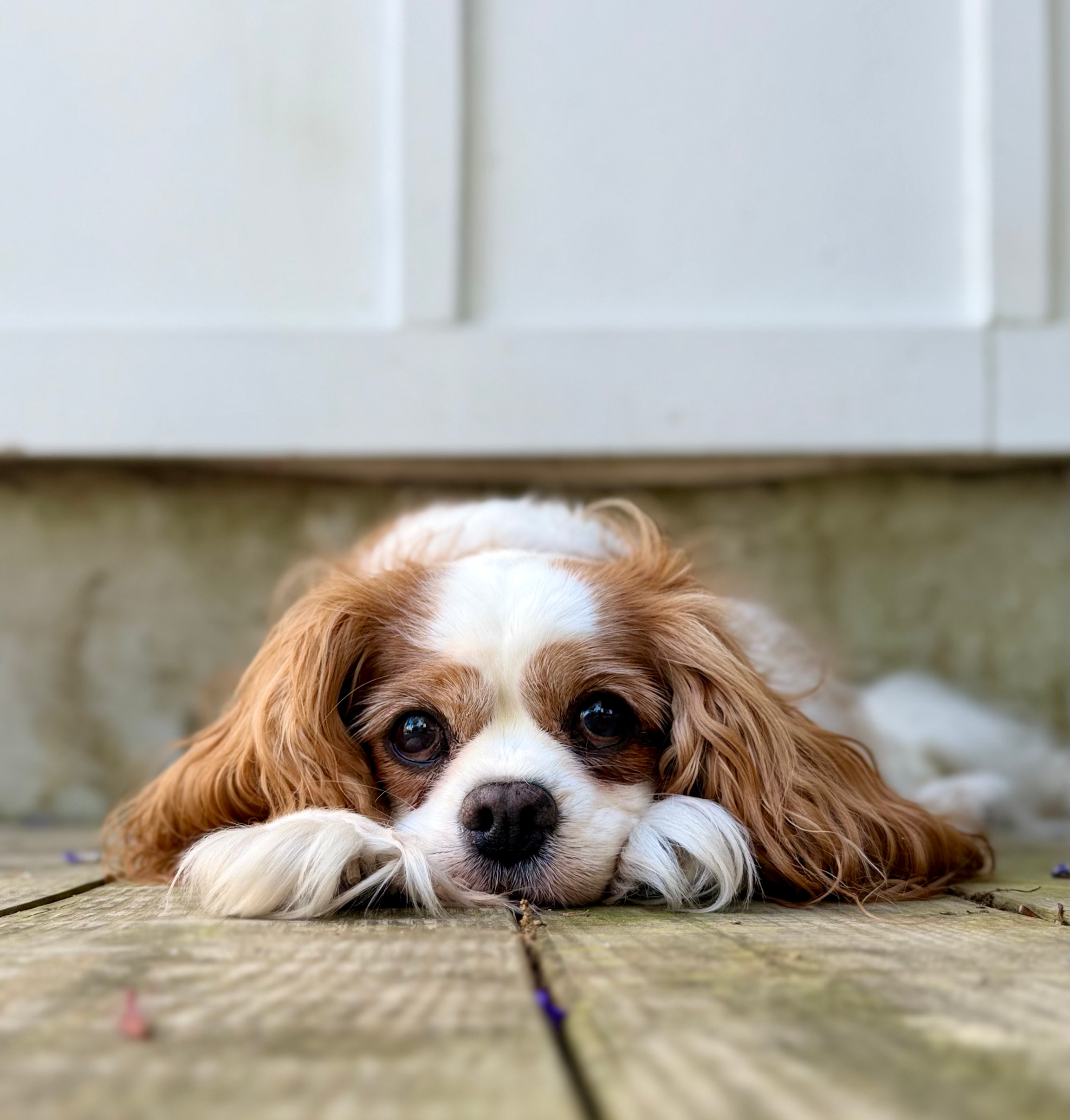
I’ve lived this firsthand with my Cavalier, Harlow.
She made it very clear early on—
she has zero interest in chaos, forced social interaction, or being handled by strangers.
It wasn’t subtle.
The nervousness.
The overwhelm.
The clear disinterest.
But even still, I caught myself trying to shape her into what I thought she should be.
Easy. Social. Go anywhere.
And at some point, I had to get honest:
She wasn’t struggling to adapt.
She was communicating.
And I had a choice—
keep trying to mold her into a role she was never meant to fill…
or meet her exactly where she’s at.
What Training Can Do—And What It Can’t
This is where the conversation needs more clarity.
Because yes—training matters.
A well-trained dog should be able to:
Regulate themselves better
Move through environments with more neutrality
Make more thoughtful decisions
Recover faster from stress
Those are real, meaningful improvements.
But training has limits.
It can’t:
Override genetics
Rewrite temperament
Make every dog enjoy chaos, crowds, or constant social pressure
And pretending otherwise creates unrealistic expectations—for both the dog and the owner.
Not every dog’s end goal is “thrives in any environment.”
And that’s not a failure of training.
That’s an understanding of the dog.
Where Owners Get Stuck
The biggest issue I see isn’t lack of effort.
It’s attachment.
Attachment to a version of the dog they wish they had.
So they:
Keep pushing exposure that isn’t productive
Mistake tolerance for enjoyment
Feel frustrated when progress “stalls”
Or assume something is wrong when the dog resists
But if the goal itself is misaligned…
Progress will always feel incomplete.
Fulfillment Doesn’t Require Exposure
This is the part that changes everything.
A dog does not need:
crowds
constant stimulation
or social interaction
…to live a full, meaningful life.
For some dogs, fulfillment looks like:
Structured walks in quiet environments
Off-leash freedom in controlled, safe spaces
Predictable routines that reduce uncertainty
Engagement with their owner—not the public
Calm, consistent days without pressure to perform
For Harlow, it’s:
exploring the yard and hunting lizards,
quiet evening walks,
retrieving her ball down the hallway like it’s her full-time job.
No chaos.
No overwhelm.
No expectations she can’t meet.
And she’s completely content.
The Shift: From Forcing to Understanding
The turning point for most owners isn’t a new tool.
It’s a new question.
Not:
“Why can’t my dog be that dog?”
But:
“What does my dog actually need to feel stable?”
Because when you stop trying to force a dog into environments they struggle to exist in…
You can start building a life where they actually succeed.
Acceptance Isn’t Giving Up
There’s a misconception that acceptance means settling.
It doesn’t.
You can still:
Train
Hold structure
Build accountability
Improve behavior
But you do it with clarity—
not by trying to override who the dog is at their core.
Training builds stability. It doesn’t change identity.
Final Thought
Some dogs don’t need more exposure.
They need:
less pressure,
more clarity,
and a life that actually makes sense to them.
And when you give them that?
You don’t get a dog who “misses out.”
You get a dog who can finally relax into who they are.