
Independence Is a Skill: Why Some Dogs Need More Opportunities to Practice Being Alone, Not Fewer
Does My Dog Need Less Time Alone… Or More?
When a dog struggles with being alone, most people assume the solution is simple:
Spend more time with them.
Bring them everywhere.
Avoid the crate.
Never let them experience distress.
Provide constant companionship.
And while those recommendations often come from a place of love, they can sometimes unintentionally strengthen the very dependency we’re trying to prevent.
Because not every dog that struggles alone needs less time alone.
Some dogs need more opportunities to practice it.
Not because we’re trying to isolate them.
But because independence itself is a skill.
And like every other skill, it develops through experience.
Attachment and Dependency Are Not the Same Thing
Healthy relationships are built on connection.
Unhealthy relationships are built on dependency.
The same is true for our dogs.
A dog that feels secure doesn’t need to maintain constant access to their people in order to feel safe.
They can relax.
Settle.
Rest.
And trust that separation isn’t abandonment.
But many dogs today rarely experience that.
Instead, they become accustomed to:
Constant access.
Constant reassurance.
Constant entertainment.
Constant engagement.
And while that may feel loving in the moment, it often leaves dogs emotionally unequipped to handle even short periods of separation.
Why Some Dogs Struggle to Be Alone
Many dogs haven’t learned that being alone is safe.
Not because something terrible happened.
But because they’ve never had the opportunity to discover that they can successfully navigate it.
They’ve never practiced:
Waiting.
Settling.
Self-soothing.
Working through mild frustration.
Resting without constant stimulation.
As a result, the absence of their person feels overwhelming.
Whining.
Pacing.
Barking.
Panting.
Scratching at the crate.
Following their owners from room to room.
And owners often conclude:
“My dog can’t handle being alone.”
But what if they simply haven’t learned how?
Confidence Is Built Through Challenges, Not Avoidance
One of the greatest gifts we can give our dogs isn’t the elimination of discomfort.
It’s the ability to move through discomfort successfully.
Because confidence isn’t built by avoiding every challenge.
Confidence is built by experiencing challenges and discovering:
“I can do this.”
This is true for:
Learning to walk politely.
Working through fears.
Remaining calm around distractions.
Resting quietly in a crate.
Resilience grows when dogs experience manageable stress and learn that they are capable of recovering.
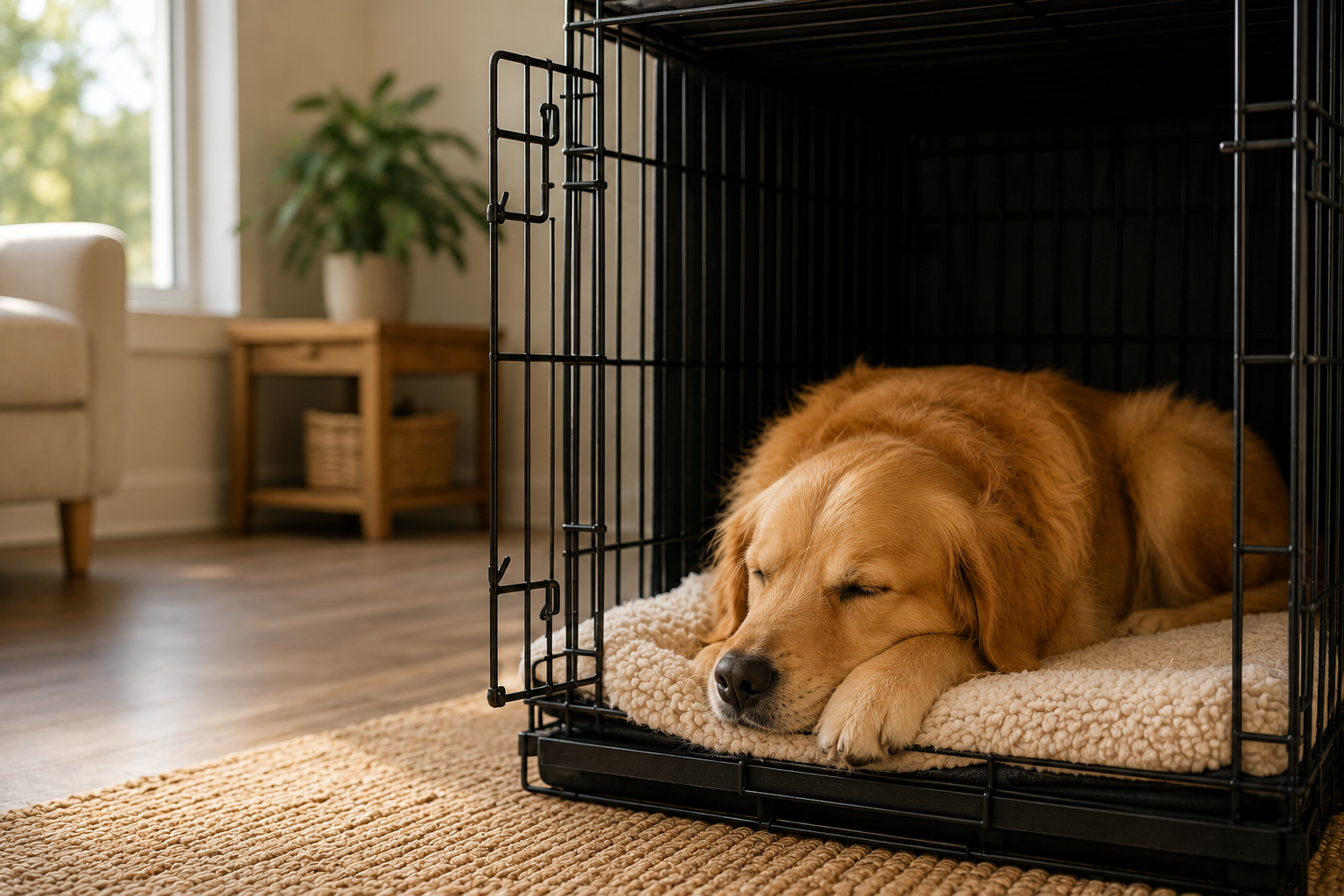
The Crate Isn’t About Punishment
Few training tools are misunderstood more than the crate.
Many owners worry:
“Won’t crating make separation anxiety worse?”
“Isn’t that cruel?”
“Shouldn’t my dog have more freedom?”
But the crate was never intended to be punishment.
At its best, the crate becomes a place where dogs learn:
Nothing bad is happening.
Nothing is required of me.
I don’t need to manage the environment.
I don’t need constant stimulation.
I can simply rest.
For many dogs, the crate becomes the first place they truly learn how to settle.
Independence Strengthens Connection
Some people worry that teaching independence will damage their bond with their dog.
But the opposite is often true.
Healthy independence doesn’t weaken connection.
It strengthens it.
Because attachment becomes a choice rather than a dependency.
Your dog isn’t with you because they panic when you’re gone.
They’re with you because they enjoy being with you.
There’s freedom in that.
And there’s peace in that.
Raising a Dog Who Can Stand on Their Own Four Feet
The goal isn’t emotional isolation.
The goal is emotional stability.
To raise a dog that can:
Relax when you’re home.
Relax when you’re away.
Settle without constant entertainment.
Handle short periods of discomfort.
Recover when life isn’t exactly as they prefer.
Because eventually, life requires independence.
Vet visits.
Boarding.
Grooming appointments.
Travel.
Unexpected changes.
And dogs who have practiced independence are often far better equipped to navigate those moments.
Final Thoughts
Not every dog that struggles alone needs less time alone.
Some need more opportunities to practice being alone.
Not because they deserve less love.
Not because we’re trying to harden them.
But because resilience is developed, not inherited.
And sometimes the kindest thing we can give our dogs isn’t more access.
It’s the opportunity to discover their own strength.
Because independence isn’t the opposite of connection.
Healthy independence makes connection stronger.
And a dog that can peacefully stand on their own four feet is often a dog that feels secure in life overall.